부석사BuseoksaApprox. boo-suhk-sah
HERITAGEGUIDE
Buseoksa Temple
A mountain temple where stories of Uisang, Hwaeom Buddhism, and a floating stone meet.
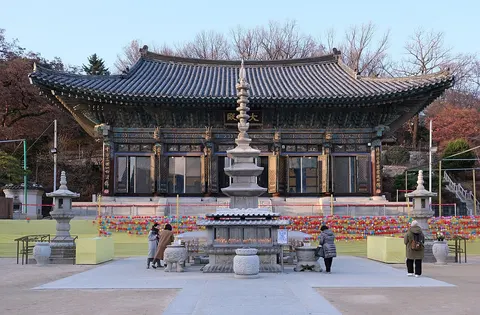
Muryangsujeon HallThe floating stone
Explore this temple A temple is not just a beautiful roof. Discover the stories, gestures and everyday practices that give Korean temple life its meaning.
A shared Buddhist devotional service that may include offerings, chanting and bows.
Meet yebul, the Buddhist service, and distinguish it from yeombul, recitation.
Explore the meaningHapjang means joining the palms; jeol means a bow or prostration. The form depends on the situation.
Understand a greeting, a standing bow and a full prostration—with illustrated steps.
Explore the meaningBeopdang is a Dharma hall; madang is the courtyard that connects temple spaces.
Explore gates, courtyards, worship halls and the spaces of a working community.
Explore the meaningSunim is a respectful address for a Korean Buddhist monastic; chadam is conversation over tea.
Learn how to greet a monk or nun, listen and ask respectful questions.
Explore the meaningA hosted stay introducing temple routines and Buddhist practice; activities vary by temple and program.
An introduction to meals, practice, conversation and quiet time—not a booking timetable.
Explore the meaningBuddhist traditions and communities shaped by Korea’s history; practice is not identical at every temple.
Compare selected Korean, Japanese and Tibetan traditions without reducing a country to one school.
Explore the meaningStart with a concrete question. Explore a photograph or an optional official video, read the meaning, then try a short understanding check.
Listen with a purpose: connect voices, bows and the Three Jewels.
Start exploring ↗02 / Explore the bowlsExplore what each bowl holds and how a shared meal becomes practice.
Start exploring ↗03 / Explore a real photoExplore a photograph of Bongeunsa and learn what a hall name tells you.
Start exploring ↗Begin with five eras. Separate a temple's founding history from the age of its surviving buildings and the stories told about it.
Explore the history timeline ↗See a greeting and a bow, learn how to move around a Buddha hall and ask before photographing. You do not need to know everything to begin respectfully.
Explore a few cultural guides, or use the English location map. The map shows places—not room availability or a ranking of temples.
A mountain temple where stories of Uisang, Hwaeom Buddhism, and a floating stone meet.
A living mountain monastery known for its long religious tradition and rich heritage landscape.
A major mountain monastery associated with the Tripitaka Koreana and the preservation of Buddhist knowledge.
Explore current programs, dates, fees and reservations on the official Templestay website. Bookings, payments and availability are handled there, not on this cultural guide.